
How to Search the Montpelier Court Docket
Montpelier offers no official docket form or public municipal search portal. So the first move is simple: read the court named on your document and contact that office directly. Each office keeps its own records process. An address alone proves nothing. A village ordinance ticket, a sheriff or state citation, a 21st JDC case, a justice-court matter, and a federal filing can all touch Montpelier. They can live in five separate record systems.
- Read the court name, case or citation number, date, and issuing agency on the notice, ticket, judgment, or other paper.
- For a possible Montpelier village ordinance matter, ask the village court for its current docket, date-confirmation, records, and payment procedure. No official public web form was confirmed.
- For a 21st JDC civil, criminal, family, probate, or related district matter, contact the St. Helena Parish Clerk of Court and ask which index applies.
- For a justice-court matter, identify the ward and confirm the correct justice-of-the-peace office rather than assuming a Montpelier court has the file.
- Confirm the current setting with the issuing court or clerk before appearing, paying, or treating a posted date as final.
For district records, the St. Helena Clerk's office sits at 369 Sitman Street, Suite 101, Greensburg. It answers the phone at (225) 222-4514. The parish says staff search indexes for the public. Computer terminals are not available. You can also mail a written district-record request to P.O. Box 308, Greensburg, LA 70441. Confirm the correct record and the payment instructions before you send it.
Montpelier Has No Official Court Docket Portal
The village's own history page carries no docket search, no court calendar, no records procedure, and no payment schedule. It posts no municipal caseload count. That gap matters. A town name alone tells you nothing about a case. A docket entry cannot be guessed from an unverified web screen either. For a current Montpelier court docket question, ask the court that issued the paper directly. That beats assuming some record is loaded online.
Quick answer: No online result does not prove that a Montpelier case or citation does not exist. It can mean the wrong court was checked, the record is not public, or the village has not published a searchable docket.
The parish's official record-access information points the same way: a wider parish search may run through a clerk index rather than a single search box. Route your request with the exact court name, date, and case number. That habit keeps a Montpelier municipal inquiry from getting tangled with a district-court file kept in Greensburg.
The Montpelier Municipal Court
Louisiana law lets a village mayor's court hear municipal ordinance matters. It does not sweep every Montpelier event into a mayor's courtroom. A village ordinance paper may route locally. A state or sheriff citation, a district criminal case, or a civil suit can belong somewhere else entirely. No official Montpelier municipal docket portal, judicial roster, calendar, or records desk procedure exists. So do not assume one from old history material. See Louisiana R.S. 33:441 for the state authority behind mayor's courts in ordinance matters. The statute creates the power, not your answer. It cannot tell you which court issued your particular paper. Anyone holding a citation should first ask whether it is a village ordinance, parish traffic, sheriff, state, justice-court, or 21st JDC matter. Then chase the docket or payment from there. The official statute page sets out the full framework for this possible local route.
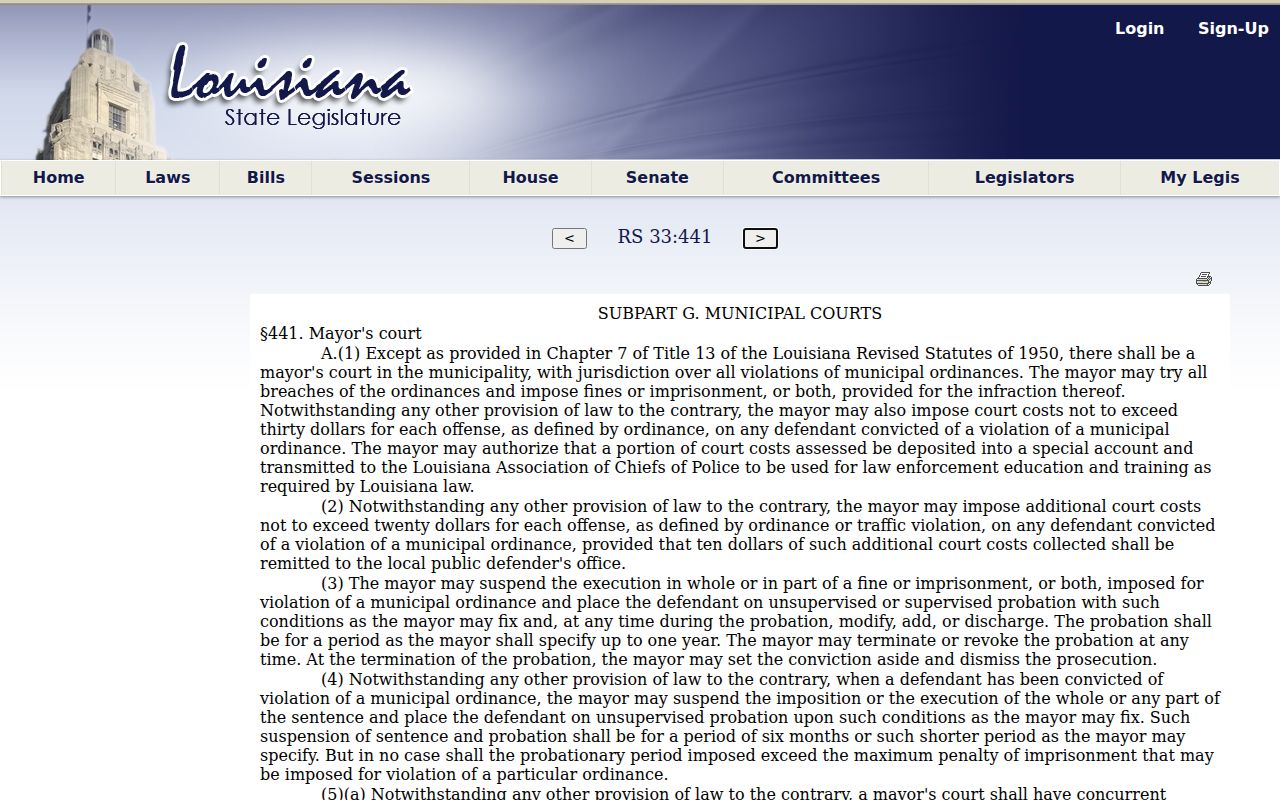
The statute backs the municipal-ordinance distinction on paper. Still, the notice itself decides whether a Montpelier case actually lands in that court or in another one.
Montpelier Mayor Court Versus 21st JDC
The quickest way to dodge a wrong-court search is telling the two routes apart. Montpelier is an incorporated village. Yet the 21st Judicial District Court serves St. Helena, Livingston, and Tangipahoa Parishes. A 21st JDC file tied to a Montpelier resident or incident stays a district-court matter. The St. Helena Clerk handles those parish records. A village ordinance record, though, may sit with the village court or its current processor.
| Question | Montpelier village route | 21st JDC and clerk route |
|---|---|---|
| Typical subject | Municipal ordinance matter if the issuing court confirms local jurisdiction | District civil, criminal, family, juvenile, probate, and related parish matters |
| Public web search | No official Montpelier docket form confirmed | No general public St. Helena civil or criminal case screen confirmed |
| Best confirmation | Current village court or issuing office | St. Helena Clerk index, counter, phone, or mail process |
| Calendar source | No official village calendar confirmed | 21st JDC annual calendar, duty judge, and clerk confirmation |
Follow the issuing court, not the mailing address. That rule anchors any Montpelier court docket search. It helps most when a ticket, summons, or order names a court the reader has never heard of.
Montpelier Court Dates and Settings
Montpelier posts no official municipal calendar. So ask the issuing court for the date, time, place, and continuance status rather than trusting an old village page, a vendor display, or memory. If your paper names the 21st JDC, check the district's annual calendar. It can show the likely proceeding block. Confirm the individual Montpelier-connected setting through the clerk or the court office after that.
| Date | Confirm the date currently assigned by the issuing Montpelier court or the 21st JDC clerk record. |
|---|---|
| Time | Use the time on the latest notice or direct court confirmation; no official village docket-call schedule was found. |
| Courtroom or location | Ask the issuing court for the location. A Montpelier address does not establish a district-court courtroom. |
| Presiding official | Confirm the current court official rather than relying on historical village-page content. |
| Setting type | Identify whether the event is an ordinance matter, traffic appearance, arraignment, hearing, motion, or another case event. |
A setting is a scheduled court event, nothing more. It is not a final outcome, and it may be reset or continued. For a district case, the 21st JDC calendar, the duty judge, and any posted DA criminal docket supply useful context. The clerk or court office remains the confirmation route that counts.
Montpelier Court Calendars Need Direct Confirmation
Montpelier posts no official village court calendar. Start with the date printed on your ticket or notice. Then call the issuing court. Confirm three things: whether the setting still stands, whether a continuance moved it, and where the appearance takes place. The village publishes no continuance deadline. Ask the court itself for its current procedure instead of assuming one. A moved setting does not mean the case was dismissed. It also does not mean it was resolved or sent to another court. A continuance changes only the date.
If your matter sits in the 21st JDC, the official district calendar lists recurring civil, criminal, traffic, juvenile, and trial blocks across three parishes. That calendar is not a Montpelier municipal case register. The 21st JDC warns that dates and dockets can change. So a district calendar and an individual court record serve different purposes when you track a hearing or court date.
Montpelier Traffic Tickets
Where a Montpelier traffic or ordinance ticket goes depends on who issued it. The village publishes no docket form. It posts no official payment schedule and no public calendar for municipal tickets. A village-issued ordinance matter may be heard locally. A sheriff or state citation can travel a parish traffic, court, collections, or DA route instead. Read the court and issuing agency named on the ticket. Only then hunt for the Montpelier court docket entry, a balance, or a court date.
One non-government vendor page shows person, address, driver-license, and ticket-number fields. It calls this a Montpelier mayor's-court lookup. That interface proves nothing about current court coverage or contact details. It also proves nothing about complete record loading, payment deadlines, or what payment legally means. Before relying on any vendor result, confirm the court, the amount, the accepted payment method, and the current date with the issuing authority.
For the parish-wide split among traffic courts, collections, and citation routes, see the St. Helena Parish traffic court records information. The county-level route still does not establish the village's own municipal payment procedure.
Montpelier Vendor Fields Need Court Confirmation
Vendor search fields can look official and still be incomplete or stale. The Montpelier vendor page lists names, address details, city, state, ZIP code, driver-license information, and ticket-number options. None of that is an official municipal docket form. A result, a missing result, or a dollar amount from such a page is not proof of the court's current record. The court's own word is the only safe check.
Before acting on a vendor result: match the court name and citation number to the original notice, then confirm the setting, amount, deadline, and payment consequence with the court or issuing authority.
Treat a vendor's published address or phone as unverified. The official village history page offers historical material, but it confirms no current court roster and no public lookup process. Calling the court directly protects you from a wrong-court payment or an outdated setting.
Where Montpelier Cases End Up
Montpelier's history does not fix today's venue. The village served as the parish seat until the seat moved to Greensburg in 1832, so older references may point to Montpelier while current district-court access centers on the Greensburg courthouse. A modern Montpelier matter could land in several places: a local ordinance case, a 21st JDC district case, a justice-court case, a parish traffic matter, or a federal matter. The first page of your notice is the venue map.
Docket flow: Montpelier mayor's-court matter → 21st Judicial District Court when district jurisdiction applies → St. Helena Parish Clerk of Court for parish district-court records.
For a 21st JDC case, the St. Helena Clerk's index and records process is your next local stop. For a village ordinance case, check who keeps the record. It may sit with the village court or a current processor. A justice-court file stays with the ward office that handled it. The broader St. Helena Parish court docket overview sorts out the district, justice, and municipal layers. It cannot answer the Montpelier-specific routing question for you.
Montpelier Former Parish-Seat Records Context
History helps when you chase older references. It does not assign a current court. The official village material names Montpelier the original parish seat before the 1832 move to Greensburg, and it preserves local-history details about the former academy and post office. There is no official inventory of historic docket books. There is also no digitization date and no current municipal caseload report. So resist turning history into claims about court files you can actually pull. Read the official Village of Montpelier history page for location and history, not as a current court portal.
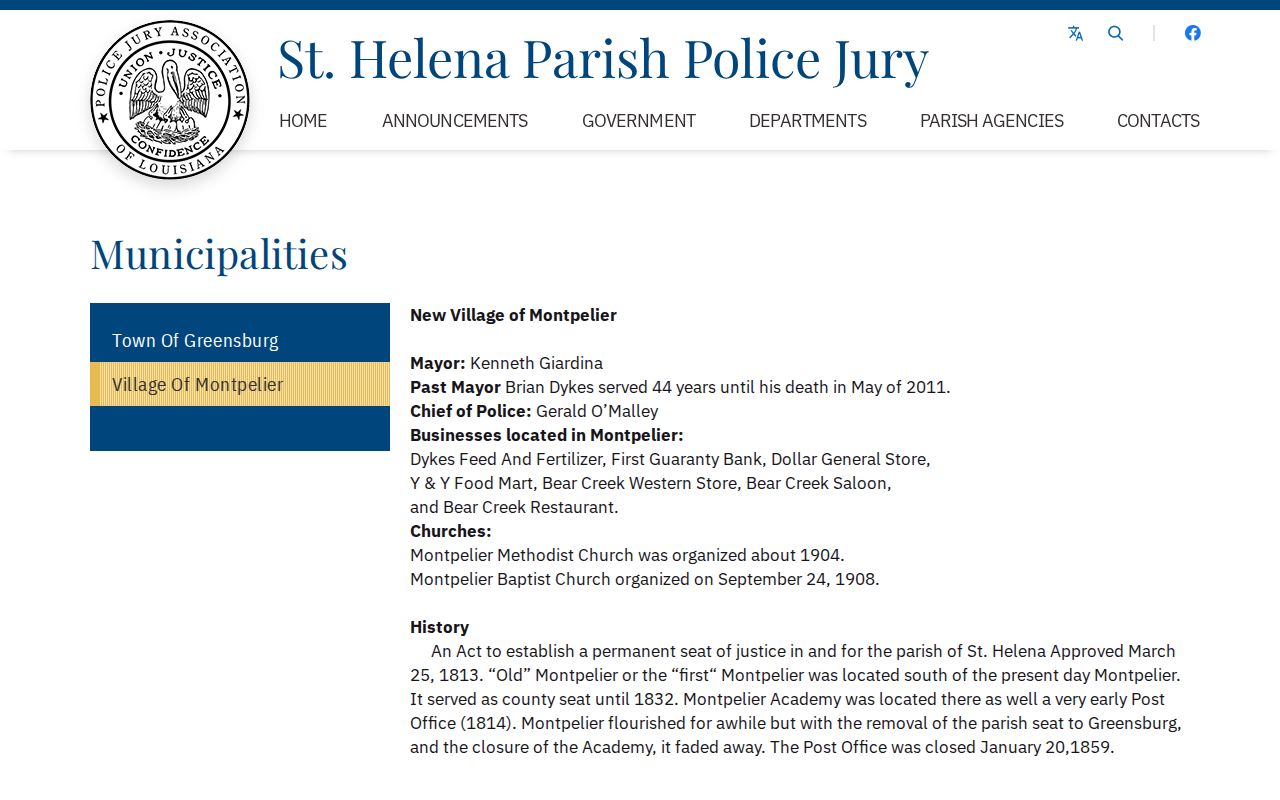
The official page confirms Montpelier's historic setting. A current court request still needs the court's name and the right office confirmed directly. The 2020 Census incorporated-place table reports 196 residents for Montpelier village. That figure describes the community. It does not count court cases or size a municipal docket.
Public Access to Montpelier Court Records
Public access turns on the record and who holds it. Louisiana public-record rules back inspection and copying of public records, yet they do not open every court document. A Montpelier municipal record may sit locally, while a 21st JDC record sits with the St. Helena Clerk. Juvenile, sealed, expunged, victim, medical, child-protection, and other protected information stays restricted even when a docket or index reference exists.
Key rules:
Code of Civil Procedure Article 251 makes the clerk the custodian of court records and permits examination and copying during office hours unless a law prohibits access.
Louisiana R.S. 44:31 gives adults a right to inspect, copy, or reproduce public records unless another law protects the record.
Louisiana R.S. 44:32 addresses custodian procedures, free examination, reasonable copying charges, and reproduction rules.
Children's Code Article 412 sets confidentiality boundaries for juvenile records and related protected information.
Cannot find or inspect a Montpelier record? Ask the office that holds it three questions: whether you contacted the wrong court, whether a restriction applies, and whether a nonconfidential redacted version exists. Never try to work around a confidentiality rule. And never treat a vendor display as the legal court file.
Montpelier Justice Courts Are Separate
Montpelier cases do not all land in the same courtroom. Justice courts here work by ward. Their civil and magistrate duties come from statute, so they look nothing like the 21st JDC or a mayor's court. The Louisiana Attorney General publishes a directory. It names six St. Helena Parish justices of the peace and constables by ward. It does not give you one shared online St. Helena docket or any single Montpelier justice-court search screen.
Start with the official justice-of-the-peace and constable directory to find your ward contact. That office can tell you where it sits, when court dates are set, and how the docket is kept. Take a request to the St. Helena Clerk only if the clerk confirms the file is truly a parish district-court record. A justice-court matter belongs with the ward office instead.
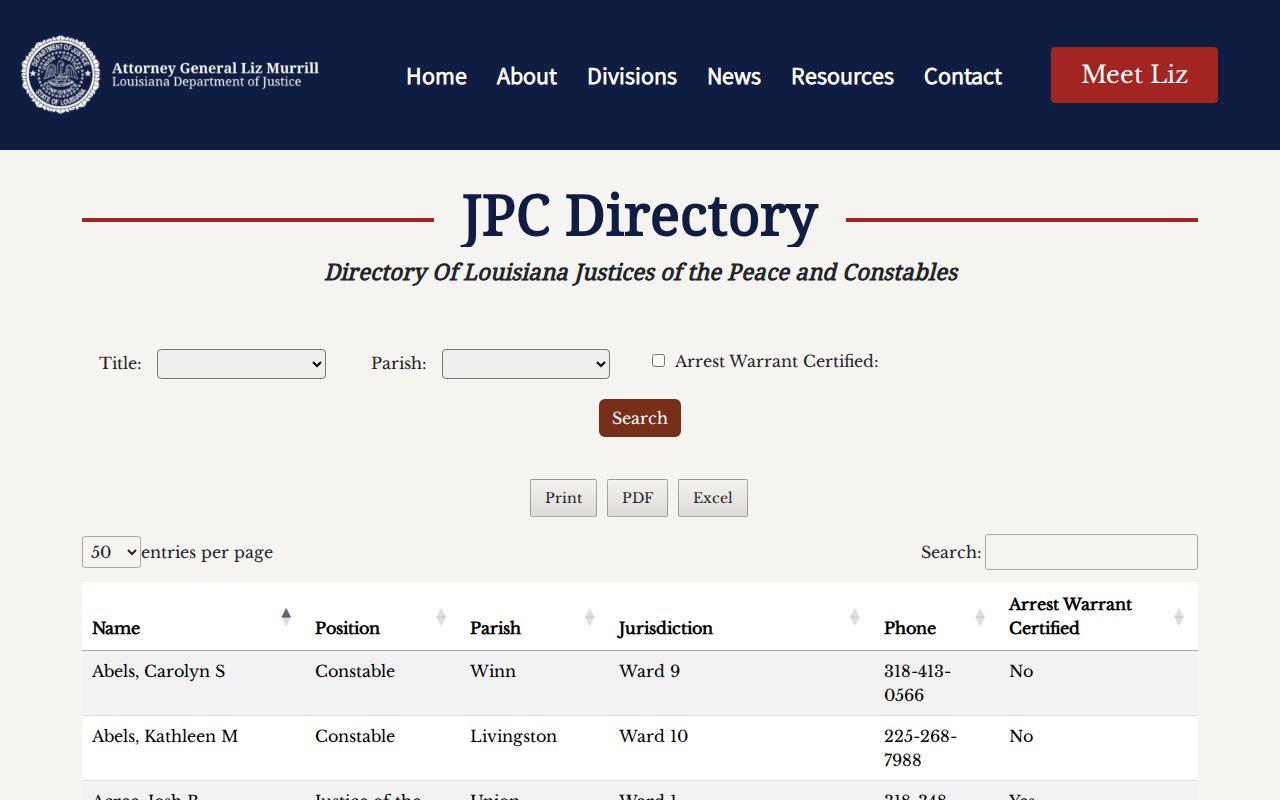
Think of the ward directory as a phone book, not a database. It routes you to a separate justice court; it is not a public Montpelier municipal docket.